Free Blueprint
90% of people still have no idea what Claude Fable 5 can actually do.
A free, operator-grade blueprint that maps the new model's real capabilities to the business systems they unlock — drawn from what we've actually shipped, not from launch-day hype.
The Claude Fable 5 Capability Blueprint
- 01
What changed with Fable 5 — in operator terms
- 02
The capability map — own today vs assist with
- 03
Six practical use cases, with the prompts
- 04
Safe autonomy — approval gates before autopilot
- 05
The 30-day adoption roadmap
Why this exists
90%
of teams we speak to are still using the new model like the old one — same prompts, same workflows, same ceiling.
Every model release ships with a wave of demos and a fog of hype. What it never ships with is a map from capability to business system — which of your workflows the new model can now own, and which it still can't.
This blueprint is that map. It's the same capability audit we run on client systems, written down so you can run it on yours in an afternoon.
What's inside
Everything the blueprint covers
The capability delta, what Fable 5 does that the previous generation couldn't — filtered to the changes that move business metrics.
The workflow map, sales, marketing, operations, reporting and customer service — where the model slots into each, with the pattern we use.
Five hand-over-first workflows, the automations with the best effort-to-payoff ratio, ranked from real client builds.
The skip list, capabilities that demo well and fail against real volume — so you don't spend a quarter finding out.
Prompts and system patterns, the exact structures we deploy, ready to adapt to your stack.
The 30-day adoption plan, a week-by-week sequence from first audit to first automated workflow in production.
What actually changed
The capability delta in operator terms — no benchmarks, no token talk, just what your systems can now do.
The capability map
Every core business system, mapped against what the model can own today versus assist with.
Hand-over-first workflows
The five automations we'd build first, with the pattern behind each.
The 30-day plan
From reading this to a working automated workflow, one week at a time.
What you can download
The Capability Blueprint
PDFThe full 20-page map — capability delta, own-vs-assist map, six use cases with prompts, and the 30-day plan.
Hand-over-first prompt pack
Prompt PackThe six reusable prompts with their safety notes, ready to paste — from the blueprint's use-case pages.
30-day adoption checklist
ChecklistThe week-by-week sequence as a printable one-pager — audit, supervised pilot, hardening, production.
Who it's for
Founders and operators who own a P&L, not a research budget — and need capability translated into workflows.
Teams already paying for AI tools but automating nothing end-to-end.
Agency and service-business leaders whose margins live and die on delivery hours.
Anyone whose current AI usage is a chat window and a prompt folder.
Built on shipped systems
DashboardLim builds AI systems on infrastructure clients already own. Everything in the blueprint is drawn from systems that survived contact with real client volume.
6+
production AI systems shipped for clients (illustrative preview)
300+
emails per day triaged by one shipped inbox system (illustrative preview)
30 days
from capability audit to first workflow in production (illustrative preview)
Field notes from a real build
The problem
A seven-figure ecommerce brand was running the new model exactly like the old one — same prompts, same chat-window workflows — while 300+ operational emails a day were still triaged by hand.
What we implemented
We ran the capability audit in this blueprint, then handed the whole-inbox triage workflow to the model end-to-end — normalised feed in, classified and drafted responses out, human review only on exceptions.
The result
Inbox triage moved from roughly three founder-hours a day to a fifteen-minute review pass, with precision high enough to keep trust after the first week.
The lesson
The gap was never the model — it was the missing map from capability to workflow. Teams adopt in days once someone shows them which system to hand over first.
How this gets delivered
- 01
Discovery
Map the workflows that consume the most operator hours.
- 02
Audit
Run the capability audit against your actual systems.
- 03
Design
Pick the hand-over-first workflow and define its guardrails.
- 04
Build
Wire the model into the data layer, not the other way round.
- 05
QA
Shadow-run against real volume before anything goes live.
- 06
Deploy
Ship with human review on exceptions only.
- 07
Hypercare
Daily precision checks for the first two weeks.
- 08
Optimise
Expand scope once trust and metrics hold.
The same delivery path we run on client systems. The blueprint teaches you to run the first three stages yourself; the rest is what working with us looks like.
What you can automate
- Claude
Whole-inbox and whole-CRM reasoning — triage, classification and drafted responses over complete correspondence history.
- n8n
The orchestration layer — normalising feeds in, routing model outputs to the systems that act on them.
- Slack
Exception review and daily briefs delivered where the team already works.
- CRM
Enriched records and next-step suggestions written back automatically after every touchpoint.
- Reporting
A daily operator brief replacing the dashboard-checking ritual.
Stop reading launch threads. Start shipping workflows.
The blueprint condenses the capability audit we run for clients into an afternoon read.
Questions, answered
What's the catch — why is it free?
No catch. It's the thinking we already do for clients, written down. Some readers will run it themselves; a few will want us to build with them. Both outcomes are fine by us.
What exactly do I get?
A 20-page PDF blueprint — the capability map, six practical use cases with reusable prompts, the safe-autonomy model, and the 30-day adoption roadmap — delivered to your inbox immediately.
Will you spam me afterwards?
No. You'll get the download email and the occasional operator-grade brief from the DashboardLim newsletter. One click unsubscribes you from everything.
Is this for technical people?
It's written for operators. Every capability is explained in terms of the business workflow it unlocks — the technical patterns are included for whoever implements them.
Who is DashboardLim?
A systems studio that builds AI automation and reporting on the infrastructure clients already own — CRMs, inboxes, spreadsheets, dashboards. The case studies on this site are the track record.
Know exactly what Fable 5 can do for your business
Join the operators reading the blueprint this week — it takes one afternoon and replaces a quarter of trial and error.
Keep exploring the Intelligence Library
Operations
Founder Inbox OS
2026-06-18
Marketing
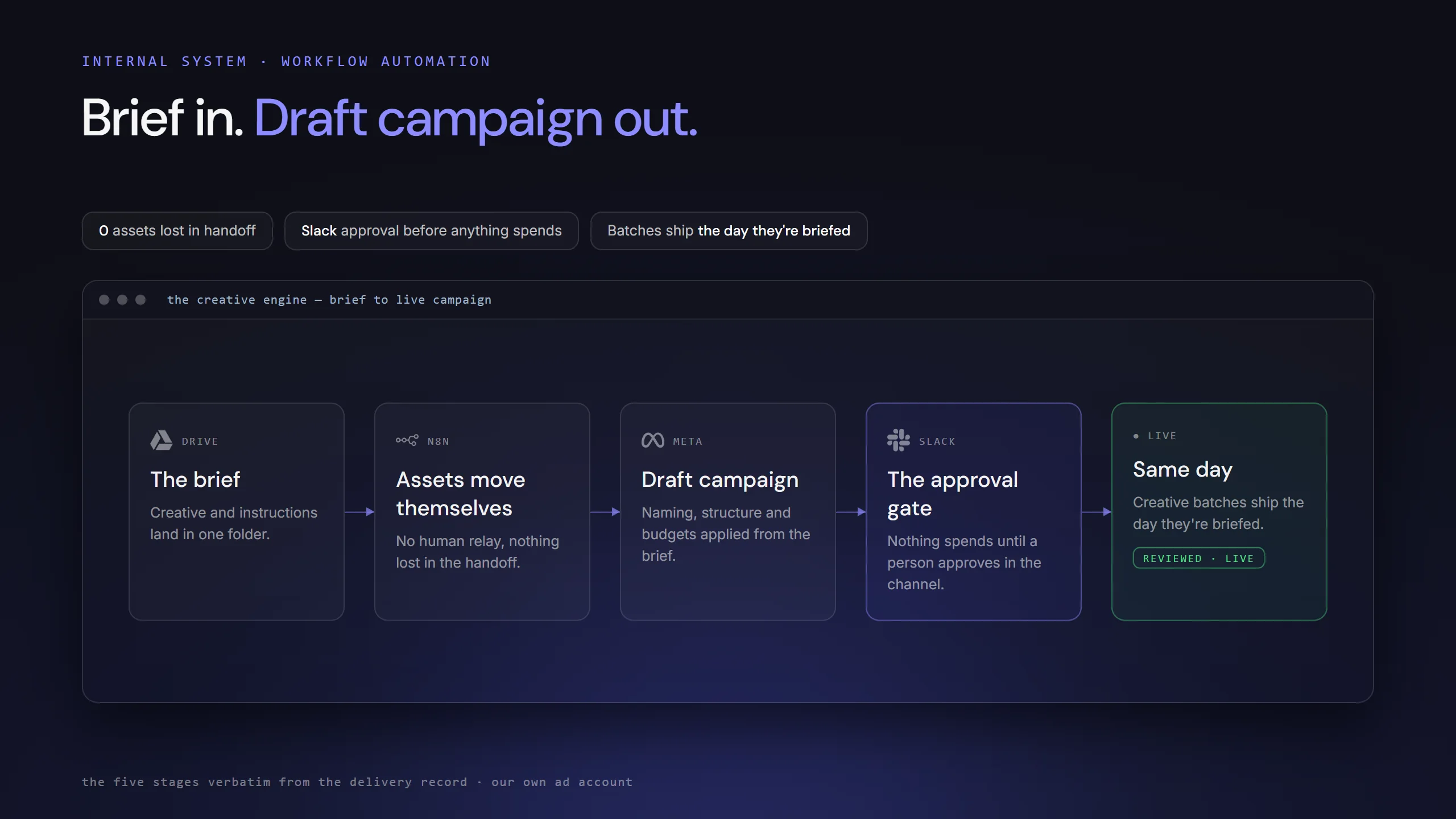
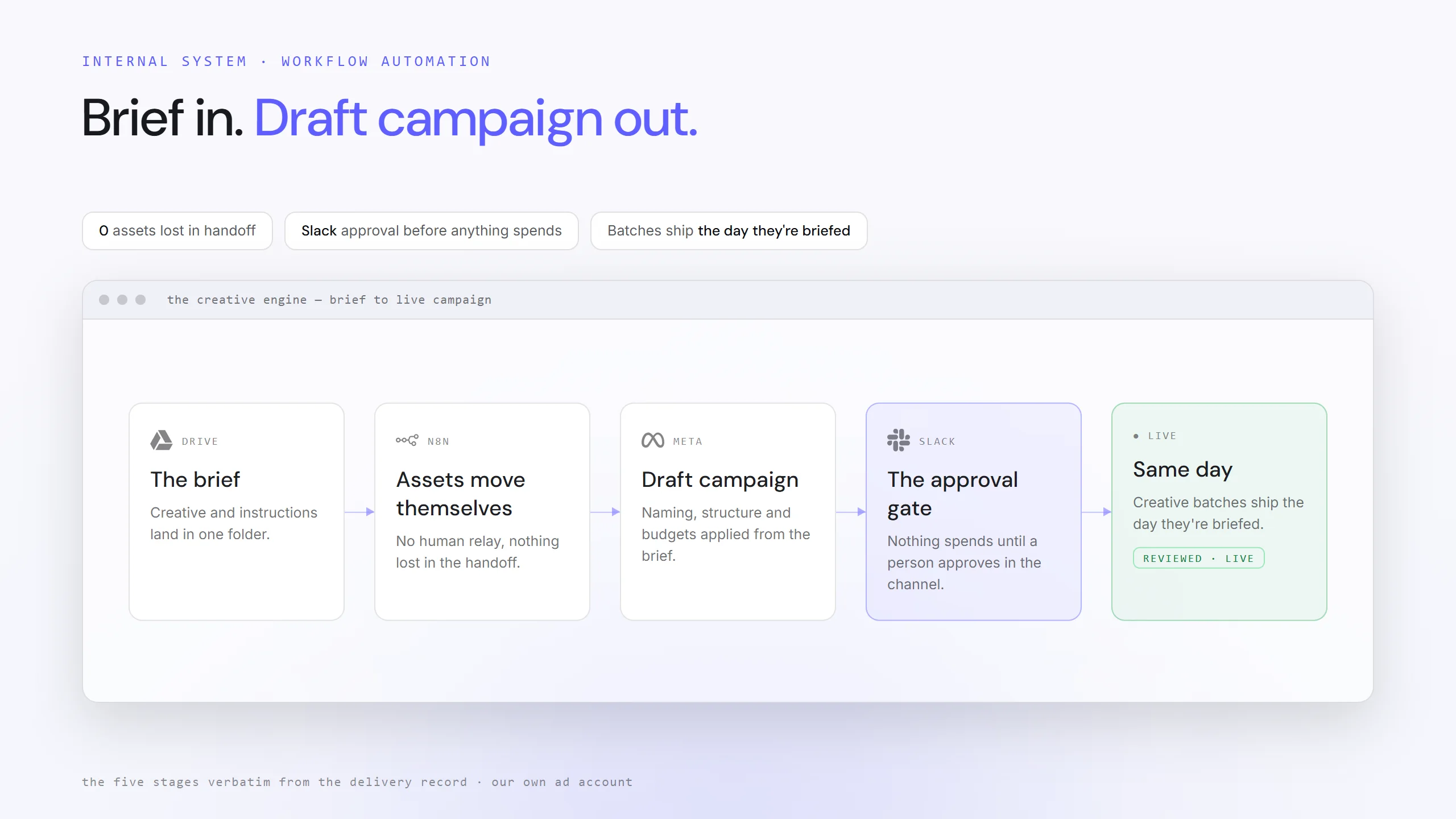
Meta Ads Creative Pipeline
2026-06-12
Automation
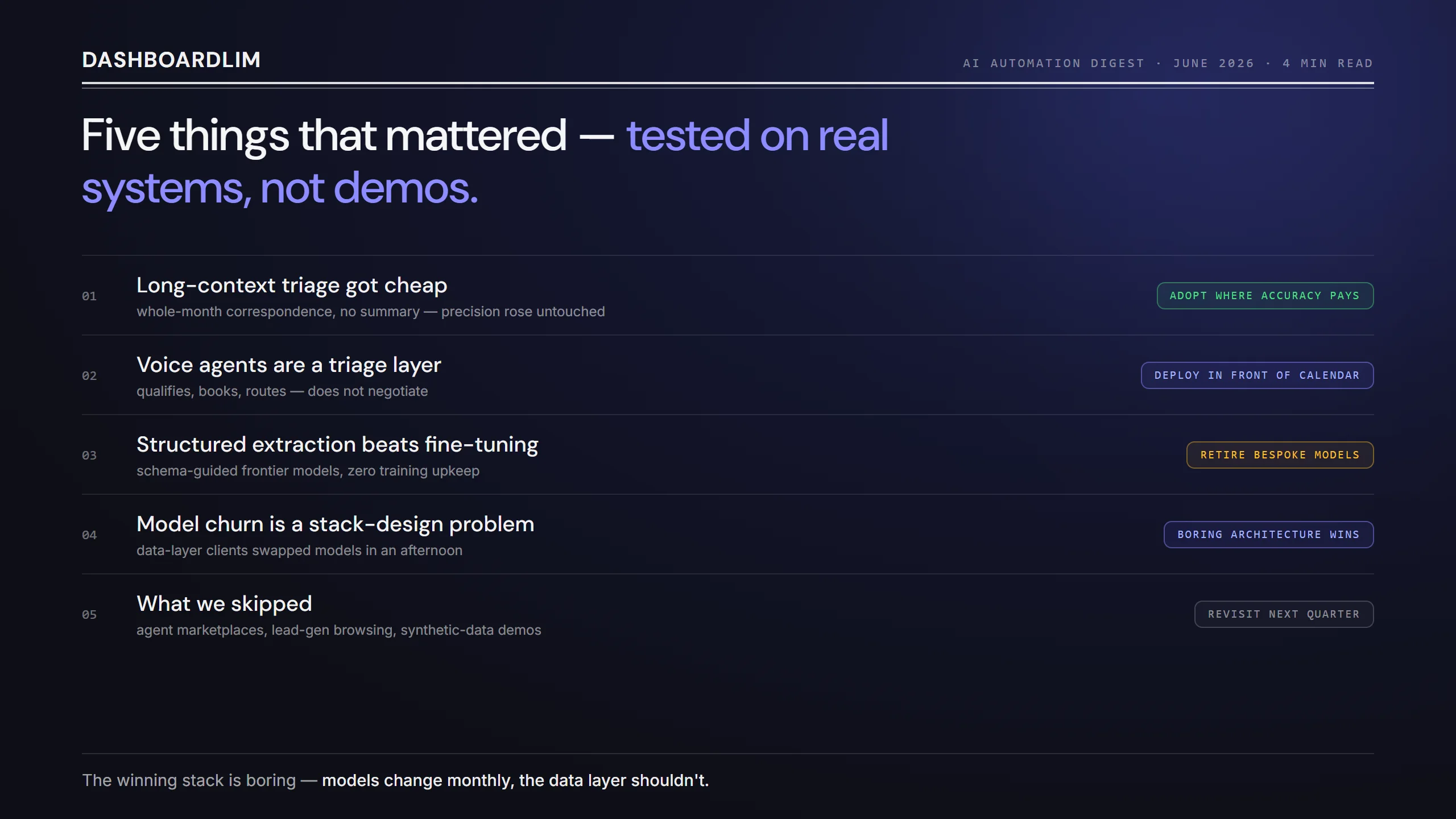
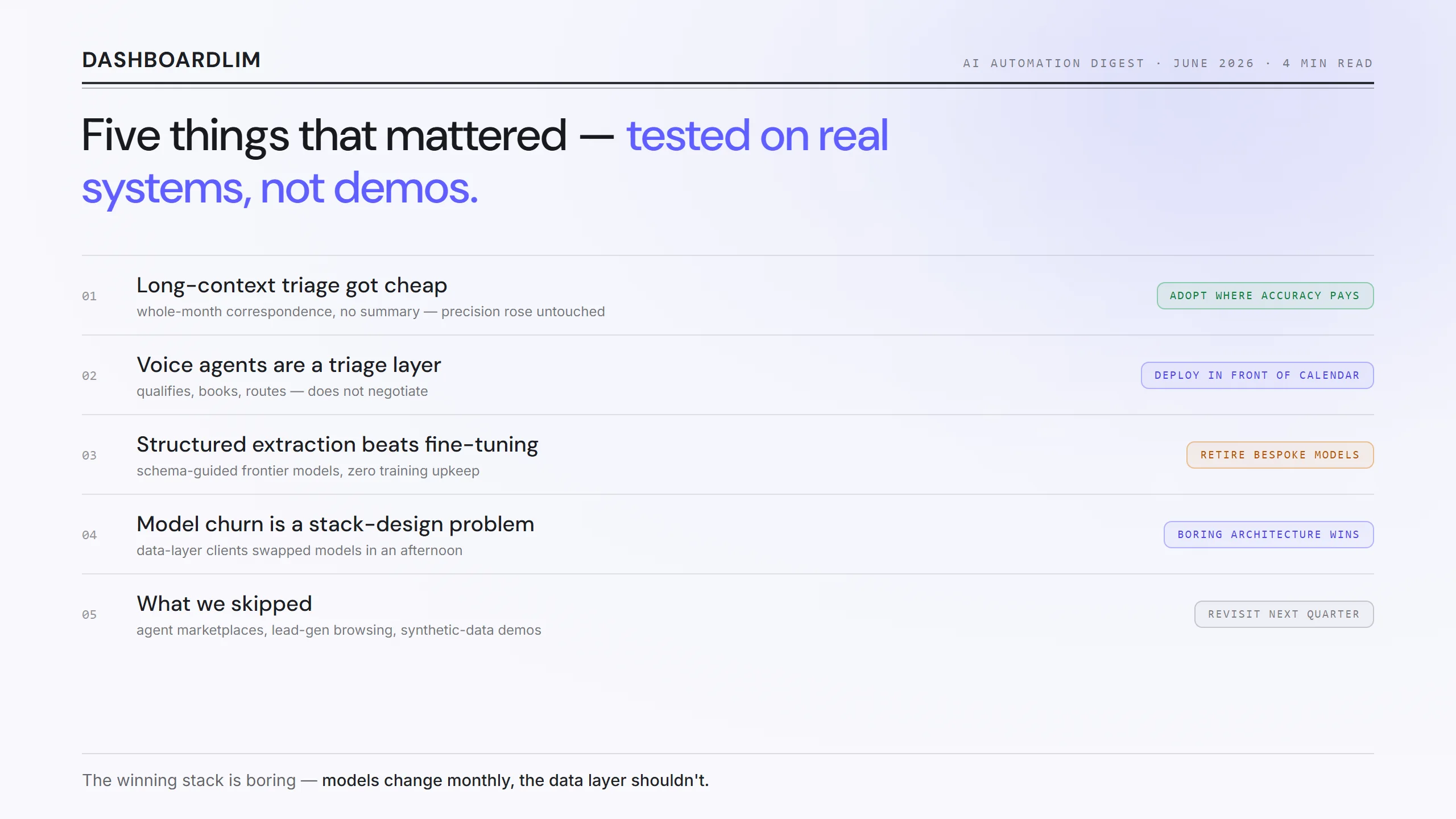
The Verdict Board: What We'd Adopt, Deploy and Skip in AI Automation
2026-08-09